


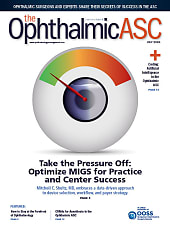


Clinical Report: AI in Ophthalmology: Windows to the Body
Overview
The integration of artificial intelligence (AI) in ophthalmology is enhancing early detection of systemic diseases through retinal imaging. Companies like Topcon and Eyenuk are pioneering AI technologies that facilitate timely diagnosis and management of various health conditions.
Background
The role of AI in ophthalmology is becoming increasingly significant as it offers the potential to detect systemic diseases early through noninvasive retinal imaging. Eye examinations can reveal critical health issues, making the integration of AI a valuable tool for improving patient outcomes and streamlining healthcare practices. This advancement is particularly important given the rising prevalence of chronic diseases that can be identified through ocular assessments.
Data Highlights
No specific numerical data provided in the source material.
Key Findings
- AI technologies can analyze retinal images to detect systemic health issues, including diabetes and cardiovascular diseases.
- Topcon's partnership with Microsoft aims to enhance the security and scalability of AI-driven healthcare solutions.
- Eyenuk's EyeArt AI system is FDA-approved for autonomous detection of diabetic retinopathy, demonstrating high accuracy in identifying vision-threatening conditions.
- AI Optics is developing a portable retinal screening solution to improve access to eye care in various healthcare settings.
- Routine screening using AI algorithms is endorsed by the American Diabetes Association to expand access to diabetic eye disease management.
Clinical Implications
Healthcare professionals should consider integrating AI tools into their practices to enhance the early detection of systemic diseases through retinal imaging. The use of AI can streamline workflows, improve diagnostic accuracy, and ultimately lead to better patient management and outcomes.
Conclusion
The advancements in AI for ophthalmology represent a transformative approach to healthcare, enabling earlier and more accurate detection of systemic diseases. Continued collaboration between technology companies and healthcare providers is essential for maximizing these benefits.
Related Resources & Content
- Topcon Healthcare Inc., News release, 2024 -- AI-powered ‘Healthcare from the Eye’
- Eyenuk, About Us, 2025 -- EyeArt AI System
- Mukamal, R., American Academy of Ophthalmology, 2024 -- Surprising health problems an eye exam can catch
- PubMed, 2026 -- Standards of Care in Diabetes
- ophthalmology management — Of Imaging and Algorithms
- contact lens spectrum — AI in Practice: The Not-Too-Distant Future
- contact lens spectrum — AI in Practice: Everyday Tools for Better Eye Care
- ophthalmology management — Artificial Intelligence, Real Benefits
- AI in Ophthalmology: Of Imaging and Algorithms
- AI in Practice: The Not-Too-Distant Future
- AI in Practice: Everyday Tools for Better Eye Care
- 12. Retinopathy, Neuropathy, and Foot Care: Standards of Care in Diabetes-2026 - PubMed
- Pivotal trial of an autonomous AI-based diagnostic system for detection of diabetic retinopathy in primary care offices | npj Digital Medicine
- Prediction of advanced chronic kidney disease through retinal fundus images by deep learning | Scientific Reports
This content is an AI-generated, fully rewritten summary based on a published scholarly article. It does not reproduce the original text and is not a substitute for the original publication. Readers are encouraged to consult the source for full context, data, and methodology.