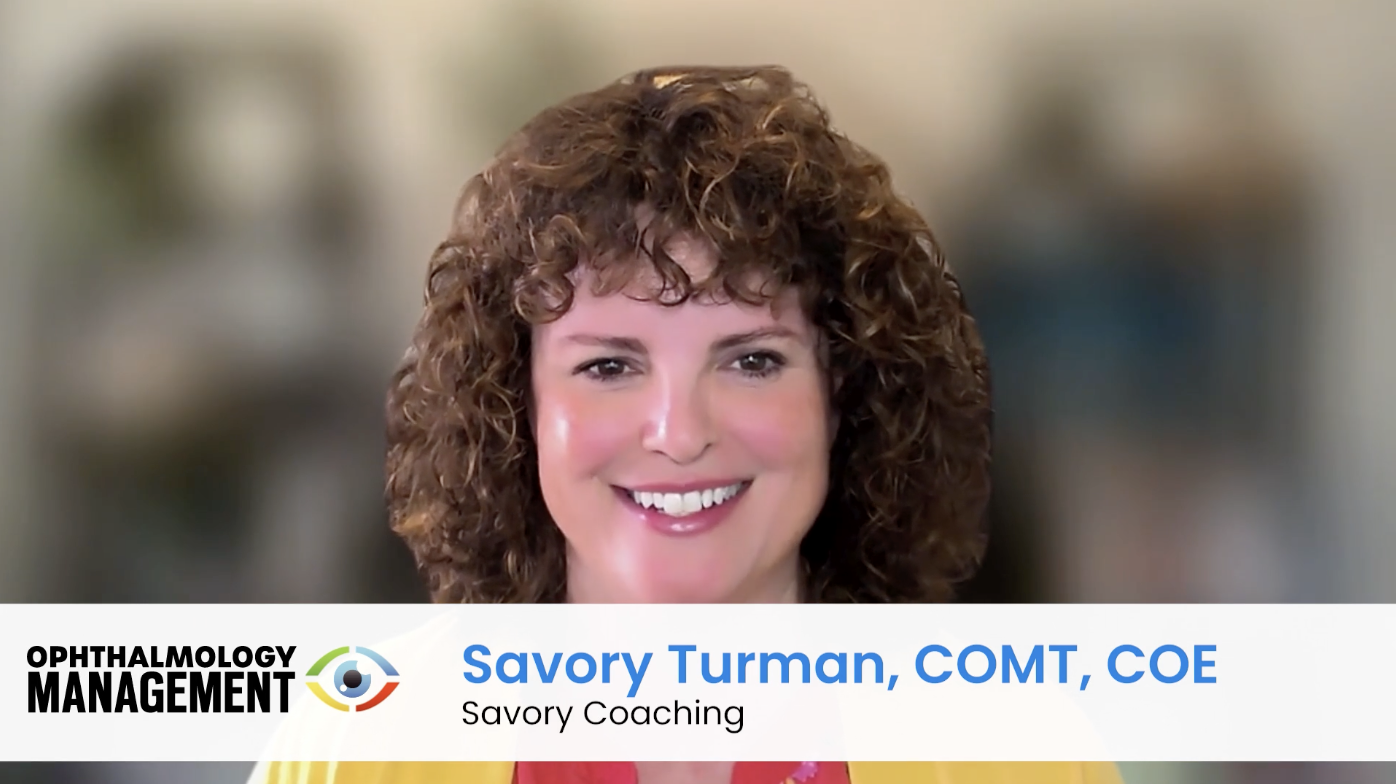
Savory Turman, COMT, COE, Savory Coaching, shares 2 settings in which curiosity can be a leading edge in the eyecare space.
Transcript edited for clarity.
I am Savory Turman and I'm a COMT and COE with nearly 30 years of experience in eye care, and I am now a professionally trained and certified Leadership Coach. Today, I would like to talk to you about one of the most powerful tools you can carry throughout your career, wherever it takes you. And that tool is curiosity.
So let’s talk about 4 settings in which curiosity can be a leading edge in the eyecare space.
First: Curiosity in Clinic
In ophthalmology, we are always learning. New technology, evolving treatment protocols, changing patient demographics—this field never stands still. The practitioners, eyecare teams, and leaders who thrive are not always the ones with the most experience. They are the ones who never stop asking why.
Staying curious means maintaining a teachable spirit—the willingness to acknowledge that you do not have all of the answers, and that the next great insight might come from a colleague, a patient, or a conversation that you almost skipped.
When you are early in your training in ophthalmology, it feels like you are learning a new language and that you are drowning in new information. And then there’s this moment where it all just clicks...and finally you feel like you know what you’re doing.
Actively staying curious can simply look like asking more questions. When I was actively in clinic and I saw a new term or disease process, I wrote it down and researched it later. I would use The Dictionary of Eye Terminology, ask a senior tech, or a doctor about the term, looking for more than just the definition. I would ask, "What’s the overall meaning of this, the treatment, the prognosis, the symptoms I should look out for next time?" Thankfully, the people around me responded very well to this and loved to share their expertise and knowledge.
When I was training technicians, I would challenge them to learn new things and bring those back to class to teach the rest of us. Part of our tech training was also teaching our team members where to find the dictionary, how to approach providers for information, and where to look for protocols. We wanted new team members to know that curiosity was valued and information was readily available.
When you approach your work with genuine curiosity, you grow, sharpen your clinical thinking, build greater knowledge, and you find a deeper love for this amazing field of eye care.
Second: Curiosity Is Invaluable in Conflict/Difficult Conversations
Now, let's talk about something that makes many people uncomfortable: conflict.
Whether it's a billing dispute, a disagreement between team members, or a patient who is really frustrated with their care—our instinct as human beings is often to defend ourselves, the situation, our coworkers, to explain, or to shut down. But curiosity gives us a different option.
Instead of reacting, try asking:
"Help me understand what happened from your perspective." Or "What were you expecting, and how did that differ from what you experienced?"
One of my favorite sayings around conflict is from psychologist Esther Perel. She says, “Conflict is an opportunity for connection.”
If we shift our mindset around conflict, we can understand the perspective of the other person. We are providing an opportunity to not only learn that perspective, but to understand the reasoning and to empathize. You can then connect with them on a different level and usually resolve the issue more effectively. And not only that, you can often avoid damaging the relationship with the other person because you’re engaging with them and not defending yourself against them.
When you lead with curiosity in conflict, you disarm tension and you demonstrate respect. This allows space for both people to share ideas, differences, and perspectives. And more often than not, you uncover the real issue—and trust me, it is almost never what it appears to be on the surface.
Other Videos From Series