





Tenpoint Therapeutics, Ltd. announced that Yuvezzi (carbachol and brimonidine tartrate ophthalmic solution) 2.75%/0.1% is now commercially available across the United States. The company said in a press release that Yuvezzi is the first and only FDA-approved dual-agent eye drop for presbyopia.
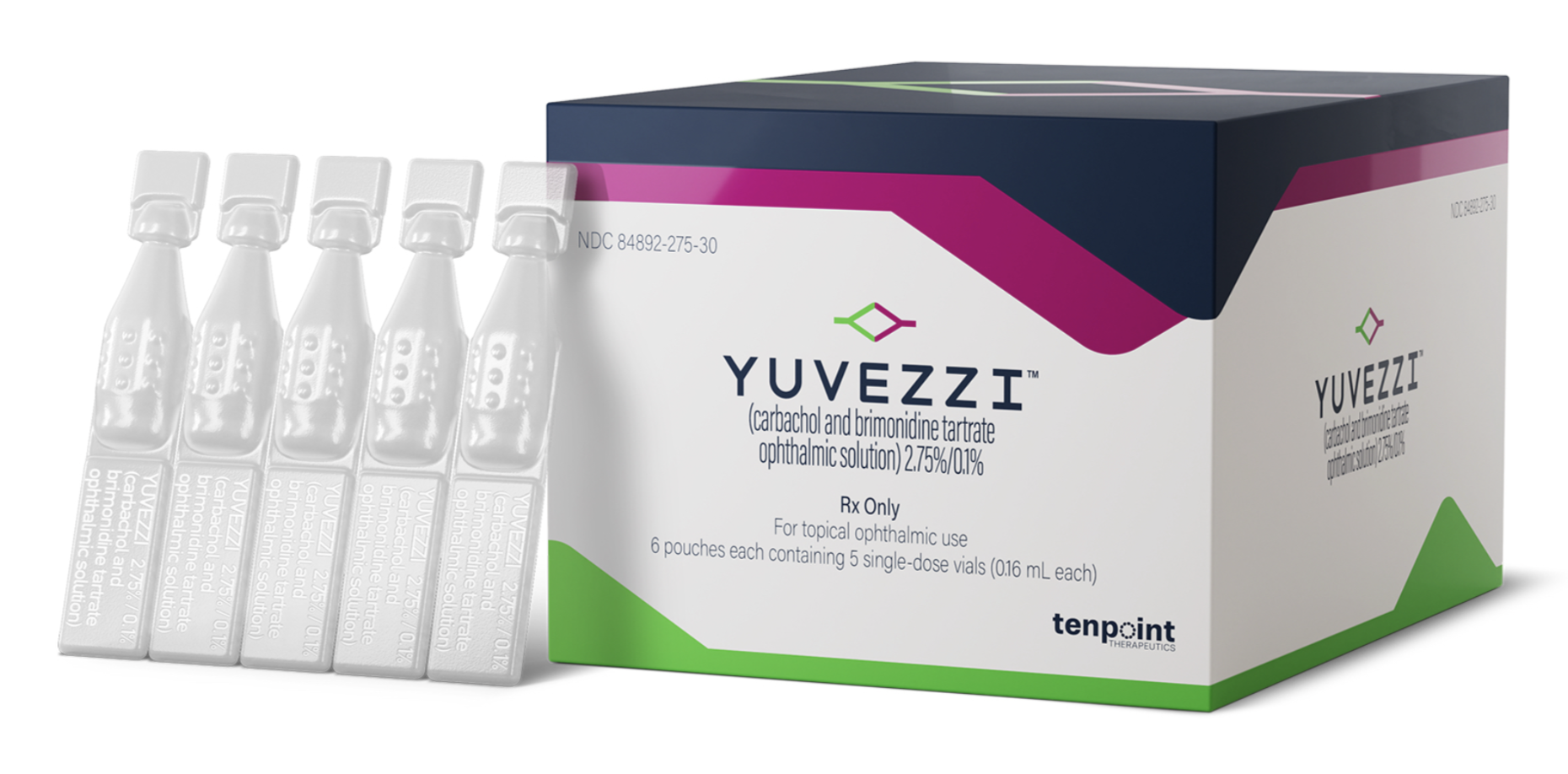
Yuvezzi combines 2 active ingredients—carbachol, a cholinergic agent and brimonidine tartrate, an alpha-adrenergic agonist that—into a single ophthalmic solution. Carbachol stimulates contraction of the iris sphincter and ciliary body, while brimonidine tartrate inhibits the iris dilator muscle and enhances the bioavailability of carbachol in the aqueous humor, the company noted in the press release. The fixed-dose combination is designed to induce pupillary constriction and create a “pinhole effect” to improve near visual acuity and depth of focus.
According to data referenced in the announcement, a single daily drop of Yuvezzi produces miosis, beginning at approximately 30 minutes postinstillation, that lasts up to 10 hours. The therapy is intended as a once-daily treatment option for adults experiencing blurry near vision due to aging. Chief Executive Officer of Tenpoint Therapeutics, Henric Bjarke, stated in the press release that the drop was developed in collaboration with eyecare professionals, with an emphasis on addressing real-world patient needs.
Prescriptions for Yuvezzi can be filled nationwide through the company’s e-pharmacy partner, PHILRx, as well as through retail pharmacies. Sample distribution to eyecare professionals is also under way across the country.
Safety Profile
Yuvezzi is contraindicated in patients with known hypersensitivity to its components or those with active iritis. Reported common adverse effects include headache, impaired vision, and temporary eye pain or irritation, according to the press release. The prescribing information notes that patients may experience temporary blurry, dim, or dark vision and should use caution when driving or operating machinery, particularly in low-light conditions. However, most side effects were mild and transient in trials.
Patients should also inform their eyecare provider if they have depression, low blood pressure, or circulation problems, the press release noted. In cases of sudden onset of flashes of light, floaters, or vision loss, patients should call their doctor immediately. The press release also warns against touching the tip of the vial to the eye, eyelid, or other surface, which can cause contamination and infection. The introduction of this dual-agent pharmacologic option represents an additional therapeutic modality for presbyopia alongside traditional corrective approaches such as spectacles and contact lenses.