




Haag-Streit announced in a press release the introduction of a new simulator that teaches residents how to screen for retinopathy of prematurity (ROP) and how to apply effective treatments.
According to Haag-Streit, the Eyesi Indirect ROP Simulator can be used by training institutions to help ophthalmologists build competence and confidence in the ROP examination in a lifelike environment.
Since ROP screening and peripheral laser photocoagulation can be time-consuming for experts to teach, the company said the release of the new module provides a solution for trainees to learn all the skills required not only to diagnose, but to treat ROP. In addition, with the help of the laser tasks, trainees learn how to “fire” the laser accurately. Using the touchscreen, users are guided through the different laser settings, and learn how to optimize parameters such as power, pulse duration, and intervals to deliver just the right level of power.
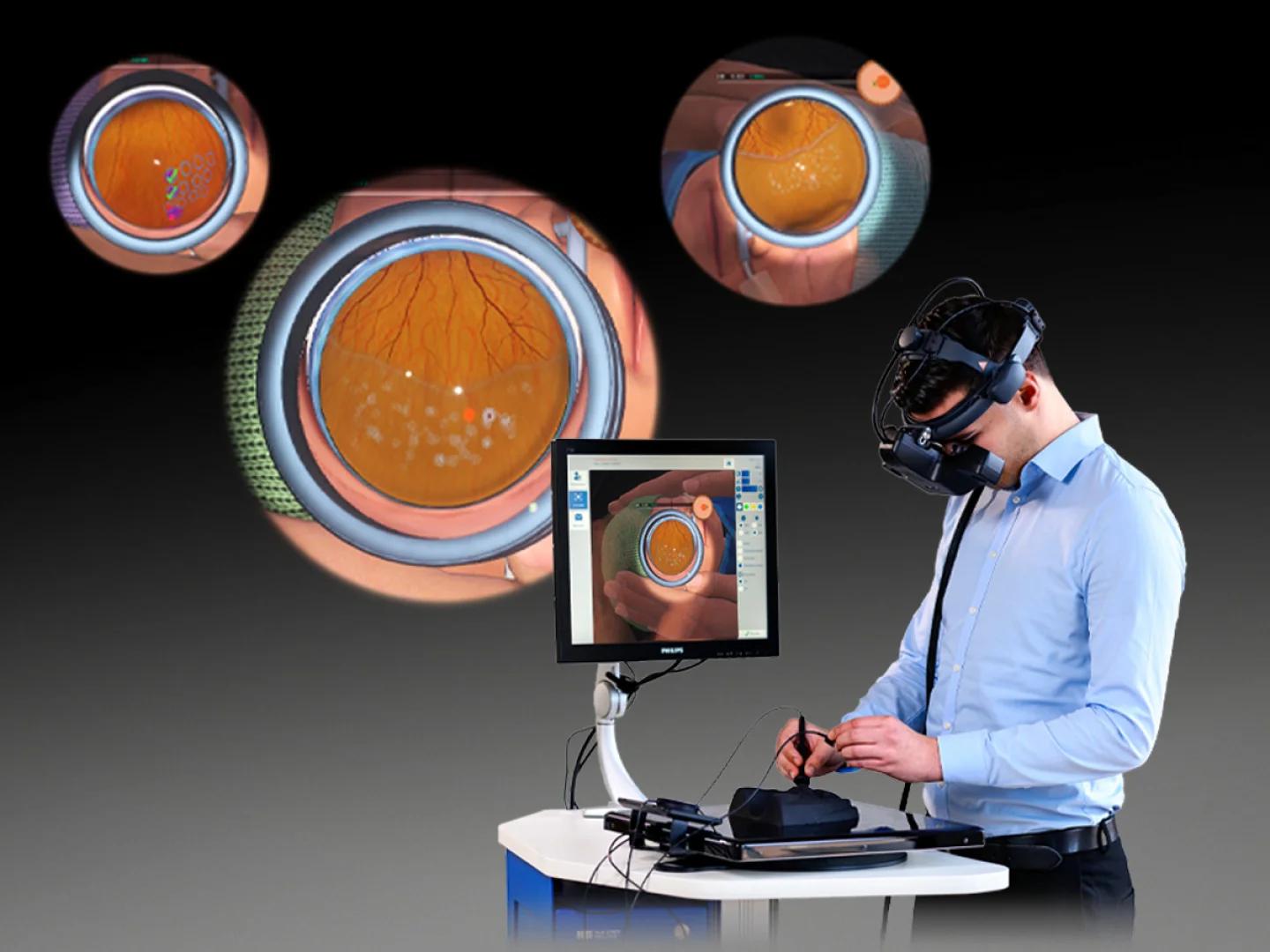
According to Haag-Streit, the new laser therapy courseware starts with exercises on focusing and aiming the laser foot beam. This is followed by courses to help users laser in the periphery, choosing the correct laser settings (duration and power), and using the laser in pulsed mode with an optimal interval between shots.
Mirroring real-life scenarios, trainees learn how to treat ROP—beginning with smaller areas, as well as the complete retina. During the training, users learn to master the optimum number and position of laser burns—too close together, and the retina can be damaged; too far apart, then the VEGF signal molecule is still produced in the untreated area, and the abnormal blood vessel growth continues.
After the simulated treatment, trainees receive a comprehensive, objective evaluation of the treated area and are appraised on their laser application vs various assessment criteria. Evaluated parameters are, for example, the delivered laser energy, the number of shots, and the completeness of the defined treatment area, said the company.
According to Haag-Streit, a new online medical course complements the practical simulator courses, offering essential background information on types of lasers and their settings, optimal placement, and color of laser spots, as well as patient preparation and laser application techniques. Additionally, trainees will receive an overview of alternative pharmacologic and surgical treatment options, the company said.