



When I decided to open a solo practice about 2 years ago, it wasn’t because I wanted a different logo on the door. It was because I wanted to return to practicing medicine the way I believe it should be practiced: with patients at the center.
Previously, I was a partner in a large group practice, where I built a refractive surgery service offering laser and lens-based correction solutions. After a change in management, I experienced a subtle shift in patient care. Some personal touches that made medicine meaningful to me faded. Staffing decisions were executed without physician input, and an overseas call center replaced direct patient communication. I spent hours apologizing to patients who couldn’t reach our office or were lost in a system that no longer felt personal. I eventually shared my cell phone number with patients so they could text me for appointments. It was the only reliable way to ensure they received care.
Not only was I unhappy with the lack of basic, thoughtful patient care, but the staff was unhappy, too. Inevitably, that affected patients. That was when I decided to build what I refer to as a high-tech, high-touch private practice.
Core Philosophy
My practice’s core philosophy is simple: Combine the best available technology with deeply personalized care. At the end of the day, patients and surgeons want the same 2 things: safe procedures and excellent outcomes. Advanced technology helps us deliver both, but in isolation it’s not enough to sustain a practice. Patients want to feel heard, known, and cared for. They want to be treated like an individual, not another body walking through your door.
My practice is designed so every patient moves through it with efficiency and comfort. In the diagnostic suite, they remain in the same chair while moving sequentially from tomography to biometry to fundus photography, and, when indicated, additional testing. A technician works from the inner circle while the patient simply pivots. It’s streamlined and intentional.
High-Tech Elements
Advanced diagnostics, including tomography and optical biometry, are used to evaluate higher-order aberrations, macular health, and parameters that guide IOL selection. I rely on the IOLMaster 700 (Carl Zeiss Meditec) for precision measurements and integrated planning software to streamline IOL calculations and toric alignment decisions. Workflow matters not just for efficiency, but for accuracy and patient confidence as well.
When I discuss IOL options with patients, I don’t use brand names. I talk about goals, such as expanding their range of vision, optimizing driving vision, or customizing postoperative adjustability. The technology they ultimately select supports their needs. The only way to understand their needs is by engaging in personal, meaningful conversation.
In cataract surgery, I incorporate the Ally Laser System (Lensar). Ally is efficient, has a small footprint, and integrates into a sterile OR workflow. When a femtosecond laser is positioned in the OR, the procedure becomes seamless not only for the surgeon and staff but also for the patient. Time is saved by prepping and draping once, and wheeling the patient from the laser suite to the OR is eliminated. From suction on to suction off, they are under the laser for approximately 1 minute. The laser portion itself takes only seconds, making it less likely for the patient to move and contributing to a safer procedure.
Robotic execution minimizes variability in capsulotomy size and centration, which is especially important when implanting premium IOLs that depend on stable positioning for optimal performance. In my experience, robotic precision reduces intraoperative manipulations and cumulative dissipated energy, translating into quieter eyes postoperatively and a smoother visual recovery. There is also a meaningful impact on patient confidence. When I explain that part of their surgery is guided by advanced imaging designed specifically for their anatomy, it reinforces their customized experience. As we know, satisfaction is influenced not only by visual acuity but by the overall surgical journey.
For patients who receive a toric IOL, custom capsulotomy features can enhance outcomes. The ability to precisely size and center the capsulotomy over the visual axis helps optimize effective lens position and rotational stability. In complex corneas, where margin for error is smaller, robotic reproducibility becomes especially valuable.
I recently treated a patient with a prior corneal transplant and significant astigmatism. By combining a toric IOL with femtosecond-created corneal relaxing incisions, her astigmatism was reduction by about 10.00 D. Postoperatively, her UCVA was 20/25. That’s not just a refractive win, that’s a life-changing result.
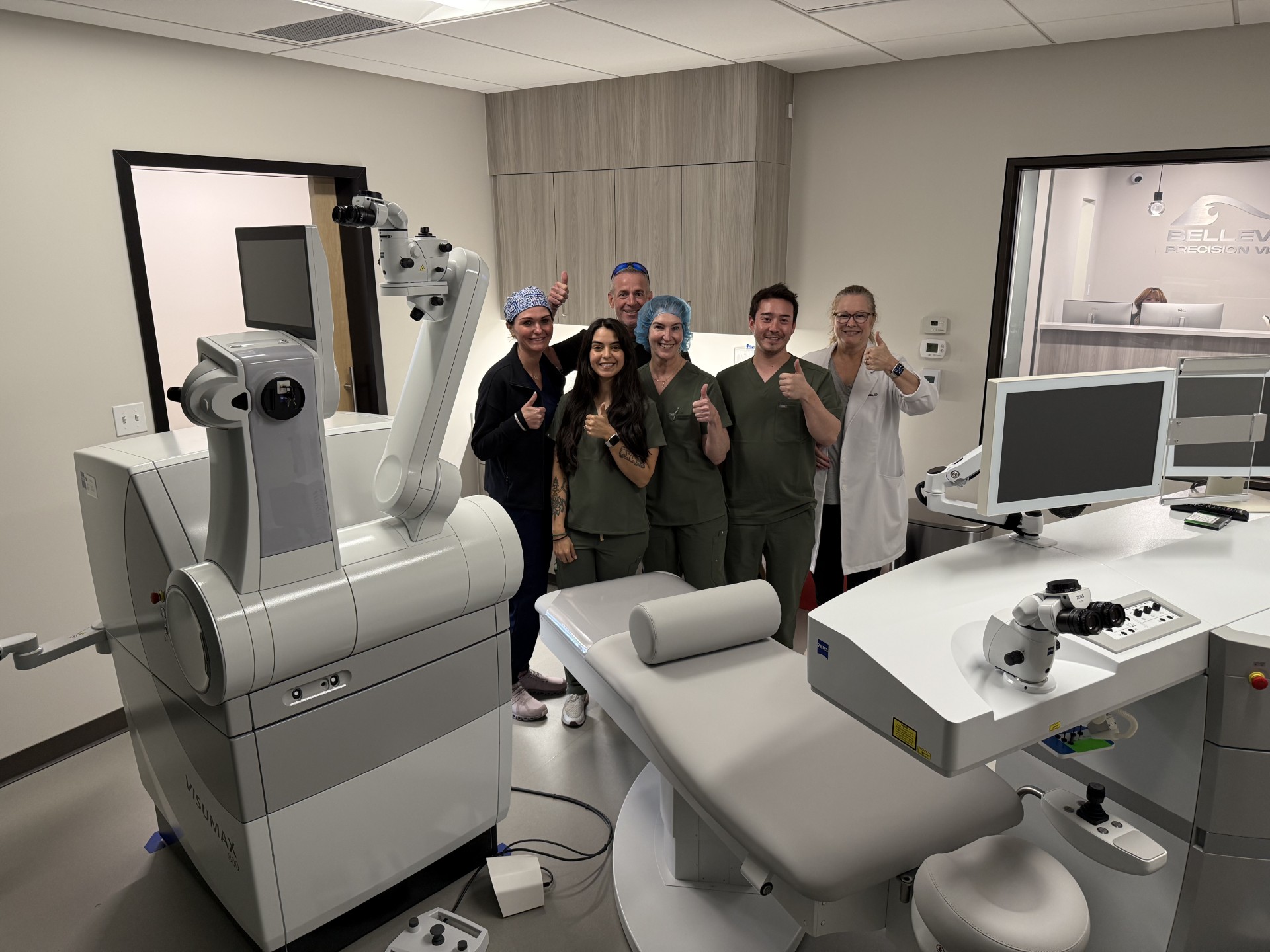
Similarly, in laser vision correction, the VisuMax 800 (Carl Zeiss Meditec) provides both surgical speed and predictability. Small incision lenticule extraction (SMILE) procedures are completed in seconds, and patients routinely achieve 20/20 and even 20/15 outcomes on postoperative day 1. They report a calm, controlled, efficient surgical experience.
The investments I’ve made in advanced technologies are reaffirmed not only by increased efficiency, but more importantly, by the consistency and safety they bring to both straightforward and complex cases.
High-Touch Elements
The Physical Space
Technology in a medical practice should feel reassuring, not intimidating. This thinking shaped my physical space as much as my equipment choices.
My laser suite includes a large switchable-viewing window between the procedure room and a family waiting area. The glass may be either opaque or transparent, allowing a family member to observe surgery with patient consent. Additionally, a live screen displays the surgical feed, eliminating mystery and fear. Recently, a patient undergoing SMILE asked if her partner could watch, and we made the glass transparent. We gave him a thumbs-up during the procedure, and afterward he told me it eased his anxiety completely. Transparency—literally and figuratively—builds trust.
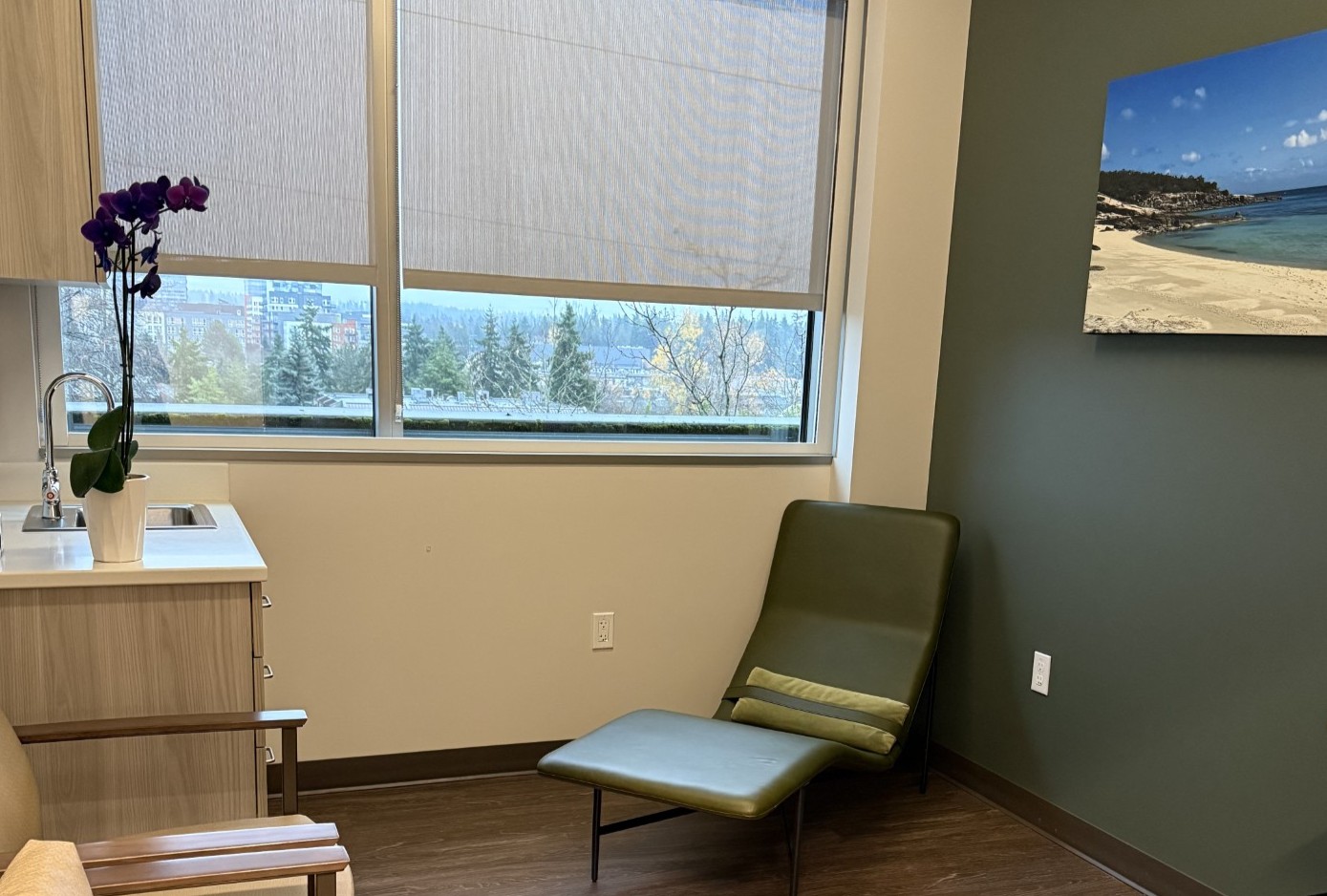
There is also a relaxation room where patients can rest both preoperatively and postoperatively. It is furnished with a chaise lounge and photography from my travels and global health work, another passion of mine. In the examination rooms, natural light filtered through layered sunshades helps maintain comfort for dilated patients without creating a cave-like environment.
These choices may seem aesthetic, but they are intentional. Patients undergoing an elective refractive procedure are making significant decisions. I want all spaces in my practice to reflect calm, confidence, and care.
The Team
Staffing plays an integral part in my high-tech, high-touch philosophy. I recruited several kindred team members to join my practice. Importantly, we shared a similar viewpoint on patient care and personalized medicine.
I made a commitment from day 1 that all opinions are equal. When I purchased equipment that turned out to be impractical, such as an autorefractor that was cumbersome and exam stools that were the wrong height, it was my staff who told me. We returned what didn’t work and replaced it with better solutions. Having open conversations as a team reinforced something critical: When you remove hierarchy from problem-solving, you improve both morale and performance.
I also stock our breakroom’s refrigerator and pantry weekly. We keep healthy groceries, a fruit bowl, vegan options, and, yes, the occasional ice cream treat. Health care is demanding, and cost of living is high. I stock my refrigerator for my family at home, so why wouldn’t I do the same for my work family?
Keeping It Genuine
Premium experiences can easily become scripted and disingenuous. Patients sense that immediately. One thing that’s helped to keep our patient experience genuine is celebrating patient outcomes authentically. On postoperative day 1, when patients read 20/15 or 20/20, their excitement is real. We ask what they plan to do with their new vision. Is it snowboarding in Whistler? Traveling? Reading without glasses? Those conversations aren’t marketing moments—they’re shared victories.
As the practice grows, my focus remains on preserving that authenticity. If we maintain a culture where people enjoy working together and believe in what we’re doing, it will be naturally reflected in the patient experience.
Would I do anything differently? Perhaps I would spend even more time on ergonomics and operational details in the planning phase. But, overall, I have no regrets. Building a high-tech, high-touch practice isn't about luxury. It's about aligning technology with outcomes, workflow with safety, and culture with compassion. With these elements guiding my philosophy, medicine feels the way it's supposed to feel again. OM